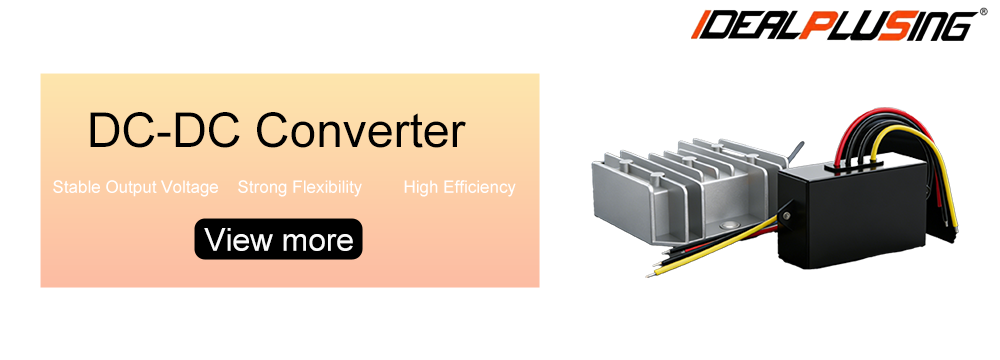
In various power supply systems, DC-DC converters serve as core components for achieving precise power conversion, widely applied in industrial control, consumer electronics, new energy power generation, and other fields. One of the key challenges for engineers during selection is how to make a reasonable choice between isolated and non-isolated converters based on specific application scenarios. The two types of converters differ essentially in structural design, performance, and safety levels, with each being more suitable for particular scenarios. Improper selection may lead to high energy consumption, operational failures, or even safety hazards. This article focuses on scenario matching, analyzes the characteristics of the two types of converters, and provides practical selection ideas.
Non-isolated DC-DC converters are characterized by simple structure, compact size, excellent conversion efficiency, and controllable cost. Their input and output circuits share a common ground without an electrical isolation structure. Common topologies include Buck, Boost, and Buck-Boost, which are generally applicable to scenarios with loose safety requirements where space and efficiency are more prioritized.
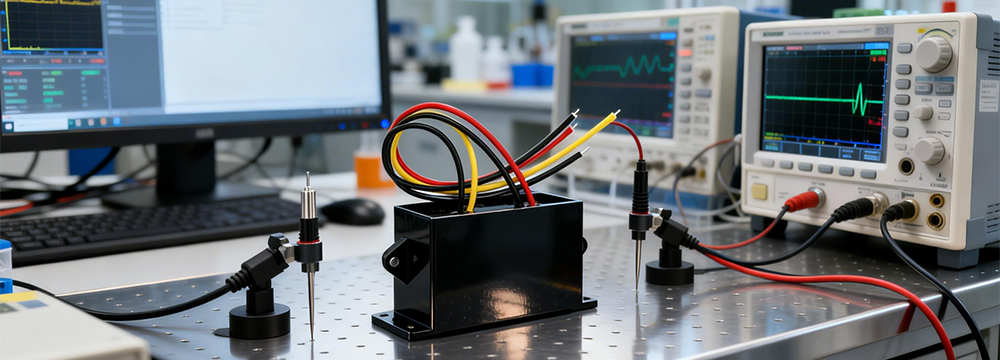
For low-to-medium power scenarios without mandatory isolation requirements, non-isolated converters are the optimal solution. In the industrial control field, such converters are often used to convert the system’s 24V DC power into low-voltage power required by peripherals such as microcontrollers and sensors. Their conversion efficiency can usually reach 95%-98%, effectively reducing energy loss. Meanwhile, the simple structural design enhances the stability of equipment operation and lowers subsequent maintenance costs. In consumer electronics such as smartphones and laptops, non-isolated Buck converters are responsible for battery charging and voltage regulation of internal components. Their compact size and affordable cost perfectly meet the lightweight and cost-effective design needs of such products. In addition, in new energy systems like photovoltaic modules, non-isolated Boost converters can boost the low-voltage power output by solar panels to a stable level, improving solar energy utilization through high-efficiency conversion performance.
Non-isolated converters are not perfect. They have some problems. For example non-isolated converters cannot stop signals from getting from the input to the output. This can hurt equipment that's sensitive. Non-isolated converters also do not protect people from getting shocked. This means they are not good for things that people use or, for things that use a lot of voltage. If something goes wrong with the input it can send a lot of voltage to the output. This can damage the devices that are connected to the output. It can also hurt people. Non-isolated converters can be very dangerous.
Isolated DC-DC converters use a built-in transformer to isolate input and output, effectively resolving these issues. They block voltage spikes, electromagnetic interference (EMI) and ground loop disturbances, protecting both operators and sensitive gear. Common topologies—flyback, forward, and LLC resonant—suit different power levels and applications.
Scenarios with strict requirements for safety and anti-interference capability are the core application areas of isolated converters. Communication base stations operate in complex power grid environments with numerous interference sources. Isolated converters can isolate interference from the input power grid, provide stable power supply for communication equipment, and avoid signal attenuation or distortion. For medical equipment such as diagnostic instruments and monitors, electrical isolation is a mandatory requirement. Isolated converters can block leakage current, ensure patient safety, and fully comply with the strict safety standards of the medical industry.
Isolated converters are also indispensable in industrial high-voltage equipment and power grid-related devices. Take frequency converters and motor drives for example. They depend on isolated converters to separate the high-voltage input terminal from the low-voltage control terminal. This protects both the control circuit and operators. Rail transit and automotive electronic systems face harsh conditions—severe vibration, large temperature changes, and strong electromagnetic interference. In such cases, isolated converters can strengthen the power supply system’s anti-interference ability and boost overall operational reliability. Note that isolated converters have a more complex structure. They also cost more and have slightly lower conversion efficiency, usually between 90% and 96%. Thus, they are not fit for scenarios with tight cost and size limits, where electrical isolation is unnecessary.
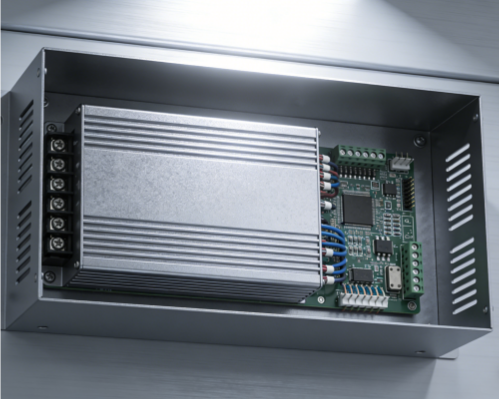
Isolated converters are really important for things like care, communications and high-voltage operations.
If we do not have to follow isolation rules we should probably use non-isolated converters first.Next we need to think about how efficient and big the converters need to be.Non-isolated converters are a choice when we want something small, cheap and good, at converting energy.Isolated converters are better when we need to be safe and avoid interference even if they cost more and are bigger.Then we have to think about where the converters will be used. Isolated converters are really good, at handling situations with a lot of interference. They are more stable when things get rough. On the hand non-isolated converters are a better choice when you do not need to deal with a lot of interference. In situations non-isolated converters can give you better value for your money.
In short, neither isolated nor non-isolated DC-DC converters are universally better. The main thing in selection is to match topology features with scenario requirements accurately. Engineers need to fully consider safety norms, efficiency targets, budget limits, and environmental conditions. This helps them pick the most suitable converter. In turn, it ensures the power supply system runs stably, safely, and economically.
We at IDEALPLUSING not only provide products, but also strive to provide customers with suitable power supply solutions and quotations.
Our core competitiveness lies in carefully selecting a variety of power supply options to help customers evaluate and choose the most suitable power supply solution.
We can offer AC DC power supply, DC AC inverter, AC AC power source(single phase or 3 phases),AC DC Ground Power Unit...
Share our interesting knowledge and stories on social media