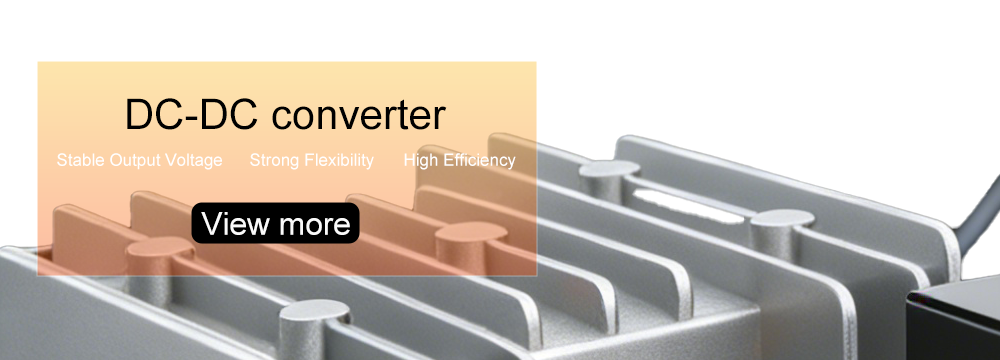
In complex electronic systems, different components often have varying requirements for supply voltage—some rely on low-voltage drive, while others need high-voltage power supply. This imbalance in voltage demand precisely highlights the core value of DC-DC converters: they act like precise "power balancers," enabling rational distribution and stable adaptation of power within the system through flexible voltage conversion. The ability to convert low voltage to high voltage is one of the key pillars supporting their balancing function.
The reason why DC-DC converters can assume the role of "power balancers" lies first in their diverse topological structure designs, among which boost converters are the core carriers for achieving low-to-high voltage balance. Such converters specifically address the matching challenge between low-voltage power sources and high-voltage loads: take solar photovoltaic power generation systems as an example, the DC power generated by solar panels is often relatively low and cannot directly meet the needs of subsequent energy storage and power supply equipment. At this point, boost DC-DC converters intervene. Through energy conversion and regulation in internal circuits, they accurately boost low-voltage electrical energy to a high-voltage level that meets application standards. This not only avoids the waste of low-voltage power but also provides a stable high-voltage power source for the subsequent operation of the system, achieving a balance between "low-voltage input" and "high-voltage demand."
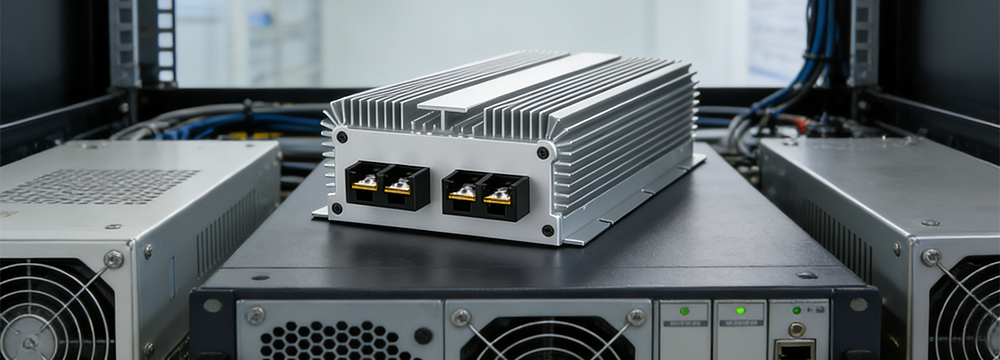
Beyond one-way low-to-high voltage conversion, the "balancing capability" of DC-DC converters is also reflected in more comprehensive voltage adaptation, with buck-boost converters being typical representatives. In electronic systems with large fluctuations in input voltage, such as battery-powered systems, the power supply voltage may gradually drop from high to low as power is consumed, while the load may require stable high or low voltage supply. At this time, buck-boost converters can flexibly switch operating modes: they can convert high voltage to an adapted low voltage when the battery is fully charged, and also boost low voltage to the high voltage required by the load when the battery voltage drops. This ensures the stable and balanced supply voltage of the system at all times, guaranteeing the normal operation of various electronic components. This characteristic of "two-way regulation and dynamic balance" makes them the core balancing components in scenarios with fluctuating voltages.
Precise regulation capability further consolidates the position of DC-DC converters as "power balancers." With the iteration of electronic technology, advanced control chips and algorithms have been widely applied in DC-DC converters. During the low-to-high voltage conversion process, they not only achieve precise elevation of voltage levels but also effectively reduce the ripple coefficient of the output voltage and improve power supply stability. For precision components with extremely high requirements for power quality, such as chips and sensors, this stable high-voltage power supply is crucial—it can avoid the impact of voltage fluctuations on component performance, ensuring the stable operation of the entire electronic system, and extending from "voltage level balance" to "power quality balance."
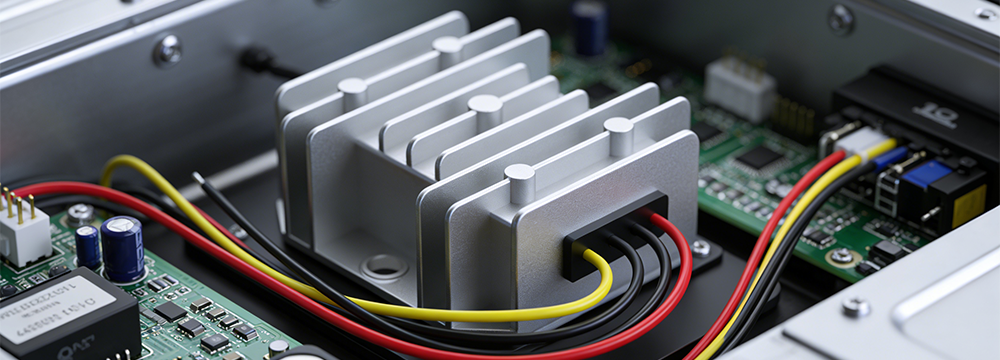
From consumer electronics to new energy vehicles, and from industrial automation to aerospace, the stable operation of various electronic systems is inseparable from dynamic voltage balance. DC-DC converters bridge the voltage gap between power sources and loads with their capabilities of low-to-high voltage conversion, high-to-low voltage conversion, and wide-range voltage adaptation, and further ensure the balance of power supply quality with their precise regulation performance. It is precisely this characteristic of "connecting the preceding and the following, dynamic adaptation" that makes them indispensable "power balancers" in electronic systems, laying a solid power foundation for the efficient and stable operation of various electronic devices.
Share our interesting knowledge and stories on social media