1.Definition, composition, and application scenarios of DC-DC converters
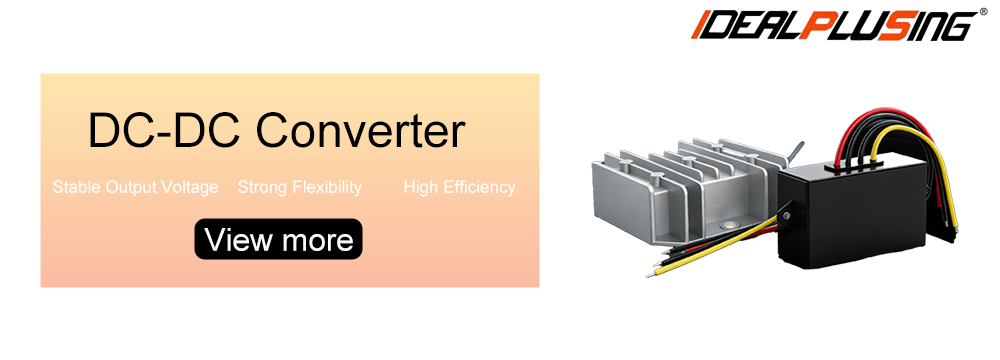
DC-DC converter refers to a direct current to direct current converter. It is a device that converts electrical energy at one voltage value into electrical energy at another voltage value in a DC circuit. For example, a converter that can transform a DC voltage (5.0V) into other DC voltages (1.5V or 12.0V) is called a DC-DC converter, or a switching power supply or switching regulator. A DC-DC converter generally consists of a control chip, inductor, diode, transistor, and capacitor. When discussing the performance of a DC-DC converter, its quality cannot be judged solely by its control chip. The characteristics of its peripheral circuit components and the wiring of the substrate can alter the performance of the power supply circuit; therefore, a comprehensive assessment is necessary. The use of DC-DC converters simplifies power supply circuit design, shortens development cycles, and achieves optimal performance. They are widely used in power electronics, military, scientific research, industrial control equipment, communication equipment, instrumentation, switching equipment, access equipment, mobile communications, routers, and other communication fields, as well as industrial control, automotive electronics, and aerospace. They feature high reliability and easy system upgrades, leading to the increasingly widespread application of power modules. Furthermore, DC-DC converters are widely used in mobile phones, MP3 players, digital cameras, portable media players, and other products. In circuit type classification, they belong to the chopper circuit category.
2.Core Advantages of DC-DC Converters
Its main feature is high efficiency.Compared with LDO linear regulators, high efficiency is a significant advantage of DC-DC converters. The efficiency is typically above 70%, and some can reach over 95%. Secondly, it has a wide voltage range.
3.The mainstream Modulation Methods of DC-DC converters
PFM (Pulse Frequency Modulation): The switching pulse width is constant; by changing the pulse output frequency, the output voltage is stabilized. PFM control type has the advantage of low power consumption even with long-term use, especially under small loads.
PWM (Pulse Width Modulation): The switching pulse frequency is constant; by changing the pulse output width, the output voltage is stabilized. PWM control type has high efficiency and good output voltage ripple and noise.
Generally, the performance differences between DC-DC converters using PFM and PWM modulation methods are as follows: PWM frequency, PFM duty cycle selection method. PWM/PFM conversion type uses PFM control under small loads and automatically switches to PWM control under heavy.
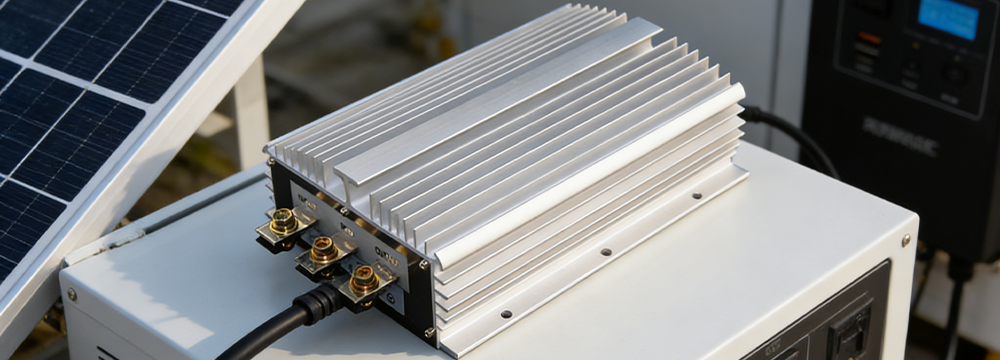
DC-DC converters feature high efficiency (over 95%) and PWM/PFM intelligent modulation technology, offering significant energy efficiency advantages. They are widely used in mobile terminals, industrial control, and communication equipment, driving an energy efficiency revolution.
If you would like to learn more, please feel free to contact us at any time. Thank you!
Share our interesting knowledge and stories on social media