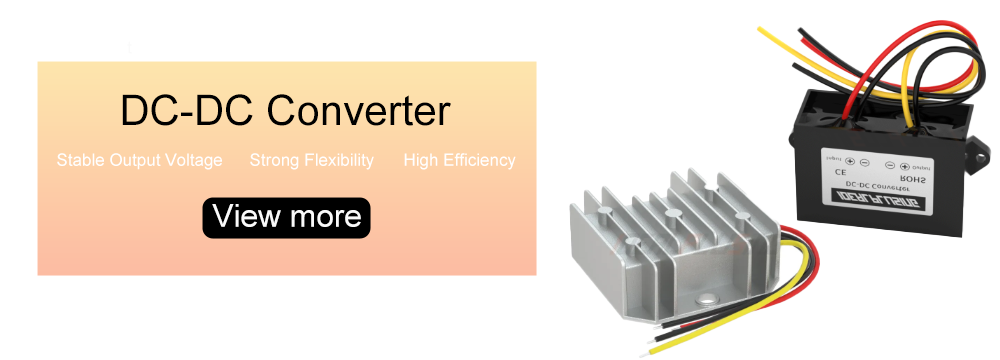
From electric vehicles to solar microgrids, efficient, stable and intelligent power management has become an essential core requirement in today's rapid development of power technology. Behind this energy transition lies a critical yet often overlooked core component: the DC-DC converter.
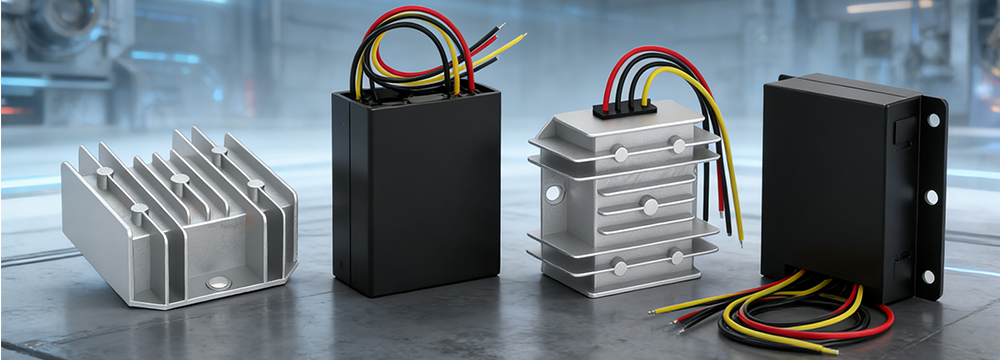
Different from AC-DC converters that convert alternating current to direct current, the core function of DC-DC converters is to realize voltage regulation within DC systems. The DC-DC converter power system provides detailed and precise power supply for each model. This is a core characteristic that can be used to develop energy sources in a large number of key areas—a renewable energy system that can be used to turn a car into an electric vehicle.
1.How important is the DC-DC car exchanger?
Modern automobiles, in particular, are pure electric powered mixed electric vehicles, which have been assembled into multiple types of electric vehicles, including various types of electric cars, and which consist of a single electric car structure:The core power of high voltage power supply (400V or 800V grade) power supply;Provides low-power (12V or 48V) car viewing lighting, car driving system, sensor and high-speed electronic assistance system (ADAS), electronic control unit (ECU), etc.
Young and small DC-DC converter, safe and highly effective capacity alternation in different electric power areas. When converting a converter, it is possible to convert a high voltage battery into a low voltage battery, etc. It is not possible to charge the 12V battery for a long time, and it can be directly connected to each type of low-cost power supply, and its efficiency is usually more than 95%, and the capacity is greatly reduced, so there is no intermediate wear and tear. In addition, when the car suddenly accelerates or the power demand increases, the high-performance DC-DC converter can actually produce a second line of motion, and the security is low. The system is designed to provide electric power, and the safety control system is comprehensive and has a comprehensive automatic driving system. In other words, the DC-DC converter has been developed as an "intelligence gate" and "determiner" for intelligent electric vehicle performance.
By stepping down the power from high-voltage traction batteries, the converters can not only charge 12V auxiliary batteries but also directly supply power to low-voltage loads. Their function essentially replaces the role of generators in traditional fuel vehicles.
From the perspective of reliability, DC-DC converters are crucial for the safe operation of electric vehicles: even if the main battery is fully charged, a converter failure can still cause key safety systems and comfort functions to fail. Therefore, automotive-grade DC-DC converters must meet extremely strict technical standards: they need to adapt to a wide temperature operating environment of -40°C to 125°C, have a conversion efficiency of more than 95%, possess electrical isolation capabilities, and must comply with functional safety standards such as ISO 26262 (ASIL-B/C level).
Adopted 48V power mixed power structure, popularization of daily benefits, bidirectional DC-DC power converter, non-practical capacity times The intelligent core of the energy management of the energy management system, which has a continuous efficiency and no coordination, and is also used to simulate the operation of the electric power system. This type of vehicle converter has high efficiency when controlling the vehicle, and has high acceleration or high-cost cargo operation. High- and low-cost system's continuous movement rate support.
2.The internal operation of DC-DC converter in renewable energy system
Renewable energy systems have natural intermittent wave motion, especially since they are light-absorbing, wind-powered, and electrically powered. Due to the direct current output power of the light shielding facility, factors such as light intensity, environmental temperature and local shielding may change over time; During the charging and discharging process of the battery and other performance systems, there is also a system to ensure the safety of the battery life and the operation of the system.
In this field, the technology of DC-DC converter is more than enough to obtain:
During the operation of the light-absorbing reverse switch, the DC-DC converter works at the maximum efficiency, and the work point of the light-absorbing equipment is improved, ensuring that it can be maintained at the start and end under multiple environmental conditions.
There is a mixed microelectronic system in place, and a two-way DC-DC converter plays the role of "capacity central wire", which can be activated. Adjustment control light down column, power flow direction between power supply and direct current, production power, power supply and power combination.
When constructing a direct current combination structure, the system capacity can be avoided and multi-dimensional AC/DC transfer can be carried out. Comparison with the AC integration method, the current direct current microelectronic power supply has a total efficiency of 5% to 15%, and the current low drop system operation has been completed with heat management costs.
In addition, in the use of new and innovative fusion devices such as electric cars, light cables, etc., high-performance DC-DC converters, connected electric cars, and functional systems. Providing renewable energy resources, supporting power across the world, providing high efficiency, structural flexibility, and clean energy grids.
In off-grid or hybrid microgrids, bidirectional DC-DC converters become the core hub of energy dispatching, responsible for intelligently managing the energy flow between photovoltaic arrays, battery packs, and DC loads (such as LED lighting and DC motors). Since the entire regulation process is completed within the DC domain, the system does not require multiple AC-DC conversion stages, which greatly reduces energy loss and improves the overall energy utilization efficiency.
Compared to traditional AC-coupled designs, modern DC-coupled renewable energy systems can reduce conversion losses by 5% to 15%. Over their entire lifecycle, this translates to higher power generation revenue, lower cooling requirements, and a faster return on investment.
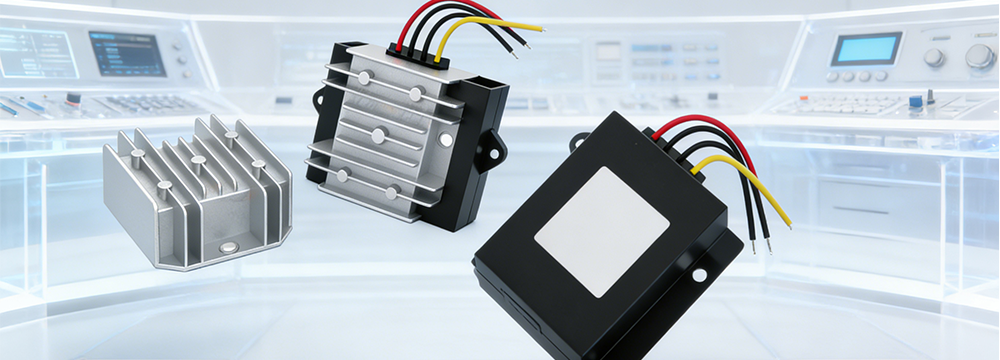
DC-DC converters are no longer just simple voltage regulators. They are intelligent power routers, drivers of system efficiency, and, more importantly, the core guardians of the future electrification ecosystem. As vehicles become fully electric and power grids continue to green, the market demand for smarter, more robust, and more efficient DC-DC solutions will continue to grow—from ensuring uninterrupted power supply to automotive airbag controllers to improving the power generation efficiency of rooftop solar panels per watt-hour. These compact and powerful modules are silently safeguarding the reliable operation of our sustainable future.
If you also want to learn more about DC-DC converters, please do not hesitate to contact us.
Share our interesting knowledge and stories on social media