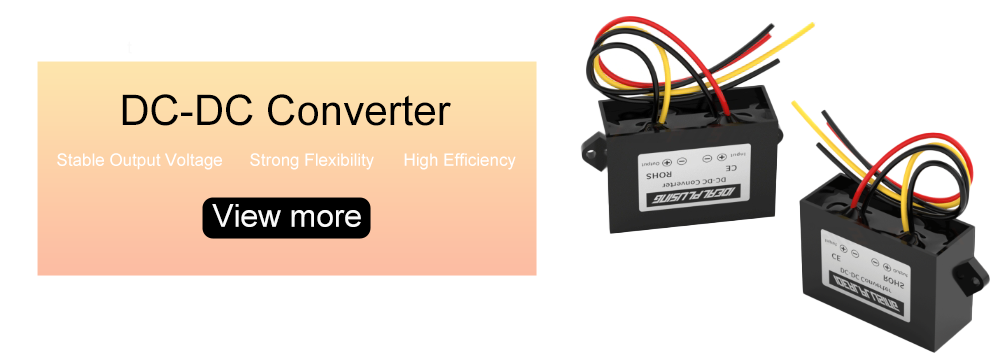
Whether it is automotive electronics or industrial automation, thermal management has always been a major obstacle for design engineers in various industries. Overheating not only damages the performance and reliability of these products, but often requires larger casings, complex cooling mechanisms, and increased costs.
The core of thermal problems is usually the power conversion stage.Traditional DC-DC converters are usually the main factor causing power loss, and their low efficiency is directly converted into wasted heat.The design of the new generation of intelligent The main factor causing power loss in traditional DC-DC converters is low efficiency. The design of the new generation of intelligent DC-DC converters is changing this phenomenon, as their intelligence can minimize energy loss and actively manage thermal output. These advanced converters are paving the way for more compact, reliable, and high-performance systems.
1.Heat removal problem: What is the source of the loss?
To efficiently address the issue of regulation the initial step is to determine the main heat generator, within the DC-DC converter.
Switching loss: happens in the short transition interval while power transistors (like MOSFETs) switch, on and off. In this phase voltage and current are present simultaneously and overlap causing each switching cycle to produce a power loss pulse.
Conduction loss: Originating from parasitic resistance in the power path, including the on resistance (RDS (on)) of MOSFETs, the DC resistance (DCR) of inductors, and the equivalent series resistance (ESR) of capacitors.
Gate drive loss: refers to the energy consumed by the gate capacitance of a MOSFET for repeated charging and discharging at the switching frequency.
Modern DC-DC converters address the aforementioned heat source issues through multidimensional optimization methods.
Topology Innovation: Towards Soft Switching Technology.The most breakthrough progress in reducing switching losses comes from the application of resonant and soft switching topologies, such as LLC resonant converters and phase-shifting full bridge (PSFB) architectures. Unlike traditional hard switching schemes, these topologies utilize resonant networks to make the voltage or current of MOSFETs approach zero before they turn on or off, thereby achieving zero voltage switching (ZVS) or zero current switching (ZCS). This mechanism almost eliminates voltage current overlap during the switching process, significantly reducing switching losses.
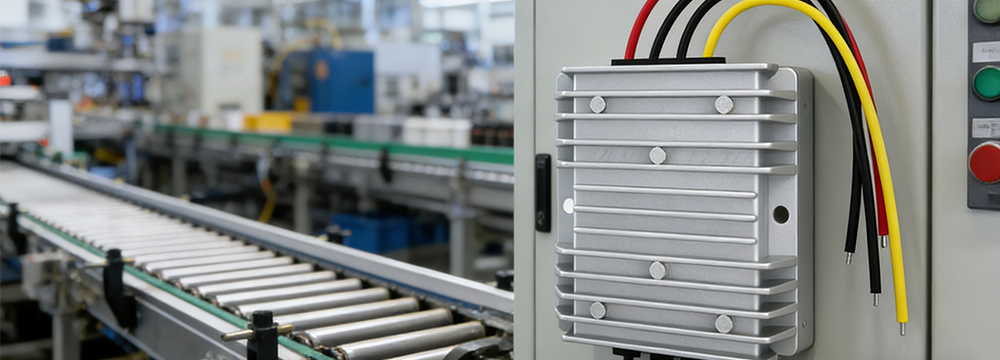
2. The Wide Bandgap Semiconductor Revolution: Gallium Nitride and Silicon Carbide
Gallium nitride (GaN) and silicon carbide (SiC) transistors are disruptive technologies. Compared to traditional silicon MOSFETs, they offer the following advantages:
Lower on-resistance per unit area (R_DS(on)), thus reducing conduction losses.
Faster switching speeds, which, if designed properly, can reduce switching losses. Faster switching speed also allows for further miniaturization of passive components such as inductors and capacitors. At the same time, the device has superior high-temperature performance, ensuring reliable operation even at higher junction temperatures.
3. Advanced packaging and integration technology
The heat must have an efficient heat dissipation path, and innovative packaging solutions play a key role in it:
Embedded component packaging: Integrating power MOSFETs and driver circuits into a single low parasitic inductance module not only reduces losses caused by parasitic parameters, but also enhances the thermal coupling efficiency between the chip and the heat sink.
Top heat dissipation package: Adopting a package form with exposed heat dissipation pads (such as DirectFET or QFN), the heat generated at the top of the chip can be directly conducted to the heat sink without relying on PCB and vias for heat dissipation. Compared to traditional bottom cooling methods, this top cooling path has lower thermal resistance and higher efficiency.
Substrate level integration: By using materials with high thermal conductivity and excellent electrical insulation properties (such as aluminum nitride AlN or directly bonded copper DBC substrates), fast and efficient heat diffusion can be achieved, significantly improving overall thermal management capabilities.
4. Intelligent Dynamic Control
Smart converters do not operate at a fixed, unchanging operating point. These converters employ digital control systems (often implemented through dedicated microcontrollers or finite state machines) to dynamically maximize efficiency under varying operational loads.
Frequency Modulation Techniques: By deliberately modulating the switching frequency—through methods such as frequency jitter or spread spectrum—the converter disperses electromagnetic interference (EMI) energy across a broader frequency band. This not only mitigates EMI peaks for compliance but also helps prevent concentrated thermal buildup at specific locations on the printed circuit board.
Intelligent Light-Load Operation: During periods of low power demand, the controller autonomously transitions from continuous conduction mode (CCM) to more efficient operational states. By entering discontinuous conduction mode (DCM) or pulse-skipping mode, the system dramatically curtails both switching and gate drive losses—effectively eliminating unnecessary power dissipation when full output capacity is not required.
Effectively reducing heat generation at the DC-DC converter level will trigger a series of positive chain effects at the entire system level:
Space efficiency: Minimizing or completely removing heat sinks, fans and thermal interface materials can release PCB space. At the time increased switching frequencies enable passive components, like inductors and capacitors to be downsized further shrinking the total footprint.
Improving reliability: According to Arrhenius' law, for every 10 ° C decrease in the operating temperature of electronic components, the lifespan of electrolytic capacitors can be approximately doubled, and the long-term reliability of MOSFETs and power ICs is significantly enhanced.
Realizing higher power density: The combination of smaller component volume and lower thermal load enables the system to handle greater power in the same space - this advantage is crucial for high demand applications such as server power supplies and electric vehicle chargers.
Simplify system design: Engineers can adopt simpler (and more cost-effective) system level thermal management solutions, or reallocate the "thermal budget" originally used for heat dissipation to improve processor performance or integrate more features.
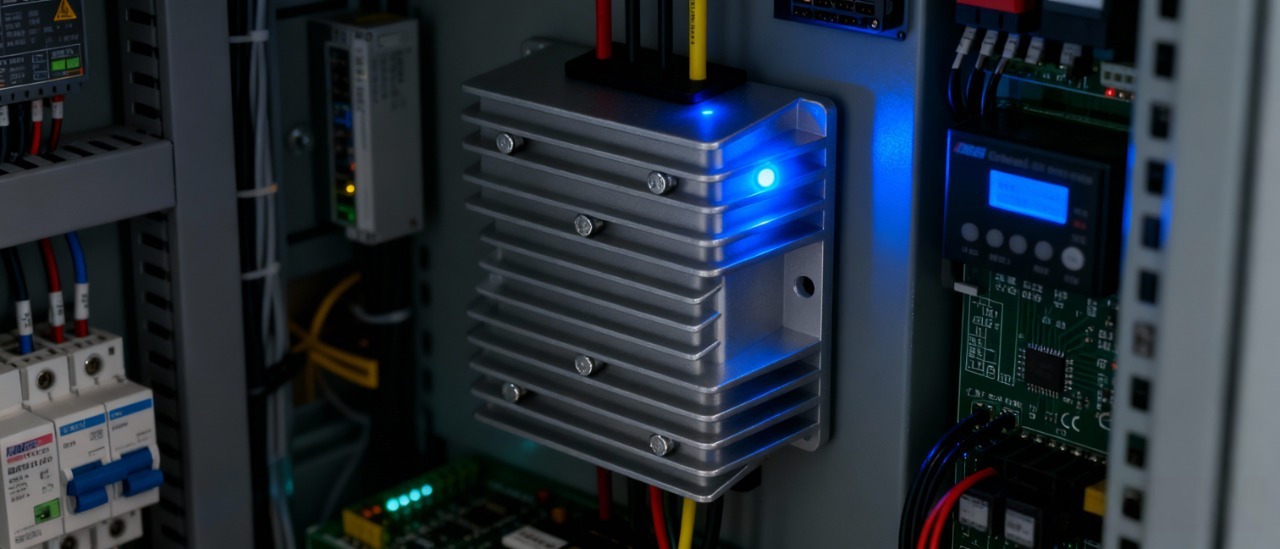
Conclusion: Thermal management has become a core element of design
Nowadays, thermal management is no longer a remedial measure considered only in the later stages of design. With the integration of soft switching topology, wide bandgap semiconductors (such as SiC and GaN), advanced packaging technology, and intelligent control strategies in the new generation of DC-DC converters, minimizing heat is becoming an indispensable fundamental design principle in power architecture.
By selecting converters developed based on these advanced concepts, design engineers can break through the constraints of traditional thermal limitations and create the next generation of products - not only with stronger performance and higher efficiency, but also more compact and reliable, transforming once thorny thermal challenges into key competitive advantages.
Share our interesting knowledge and stories on social media