We have all fallen into that kind of anxiety dominated by electricity. In front of the airport gate, the mobile phone suddenly flashed a glaring red low battery warning. Midway through an important meeting, the screen of the laptop, which was claimed to have "all-day battery life", suddenly dimmed. Or as a developer, one can only watch helplessly as the meticulously crafted product undergoes frequency reduction due to heat generation, and the battery life accelerates with each charge and discharge.
1.Where exactly is electricity consumed?
The core of the problem often lies in conversion loss - when voltage conversion occurs inside the equipment, a large amount of energy is dissipated invisibly in the form of heat energy. This kind of waste is far from a minor issue; in essence, it constitutes a fundamental constraint on the performance, portability and environmental potential of the equipment.
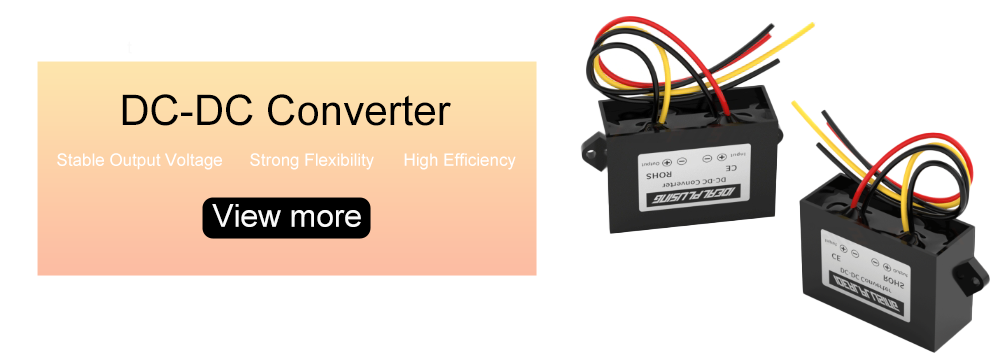
However, a silent yet profound technological revolution is underway. At its core is a key component hidden deep within the circuit: the high-efficiency DC-DC converter.
2.The Unsung Power Maestro Inside Every Modern Device
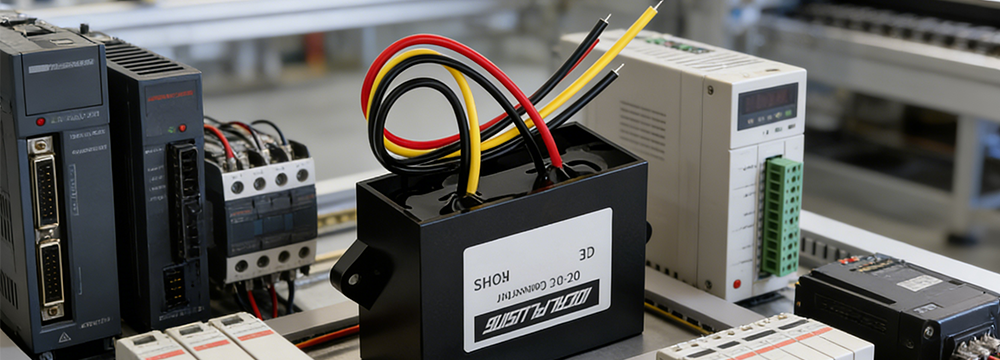
The core of a DC-DC converter is a power converter. It precisely converts the direct current energy from a power source—such as the 12V from a car battery or the 5V from a USB port—into the specific operating voltage required by components like chips, sensors, or screens.
For decades, this conversion process was inherently wasteful. Basic linear regulators, which work like a variable resistor, could burn off 40% or more of your input power as heat. The move to switching regulators was a leap forward, but early designs still wasted 15-25% of precious energy.
Today, the game has changed. High-efficiency DC-DC converters operate at 95%, 98%, and even over 99% efficiency. That single-digit percentage improvement is transformative.
3.The Triple Engine of the Revolution
This leap in performance is being driven by three concurrent technological breakthroughs.
Development of Wide Bandgap Semiconductors: Beyond Silicon
Silicon has traditionally served as the base for components yet it has now hit its physical boundaries in power switching uses. This is the point at which wide bandgap semiconductors such, as gallium nitride (GaN) and silicon carbide (SiC) become relevant.
These materials offer faster switching speeds, lower resistance, and the ability to operate at higher temperatures. This allows for smaller magnetic components, significantly increases power density, and achieves efficiency levels of up to 90%.The ultra-thin GaN laptop chargers replacing bulky old chargers are a typical example of this technology in practical use.
Smarter Adaptive Control Schemes
Modern converters are not dumb switches; they are intelligent systems. Using sophisticated digital control (often with dedicated microcontrollers), they can adapt in real time to constantly changing conditions.
The Outcome: High efficiency is no longer just a peak spec on a datasheet; it's maintained across a wide range of real-world use, from sleep mode to maximum performance.
Advanced Topologies for Every Task
Engineers now have a specialized toolkit of circuit "blueprints" or topologies:
Synchronous Buck Converters: The workhorse for stepping down voltage in processors and memory, now made ultra-efficient by replacing lossy diodes with actively controlled MOSFETs.
LLC resonant converters are the secret behind the astonishing efficiency of modern server power supplies and television power boards. At their core, they leverage the principle of resonance to achieve a "soft switch"—allowing components to turn on and off at the instant when voltage or current is zero, thereby completely eliminating the main sources of loss found in traditional switches.
Hybrid and multiphase designs represent another kind of sophisticated strategy. These architectures are specifically tailored to address challenges such as high current transmission or ultra-fast transient response, providing long-lasting, clean, and stable power even to the most demanding modern CPUs.
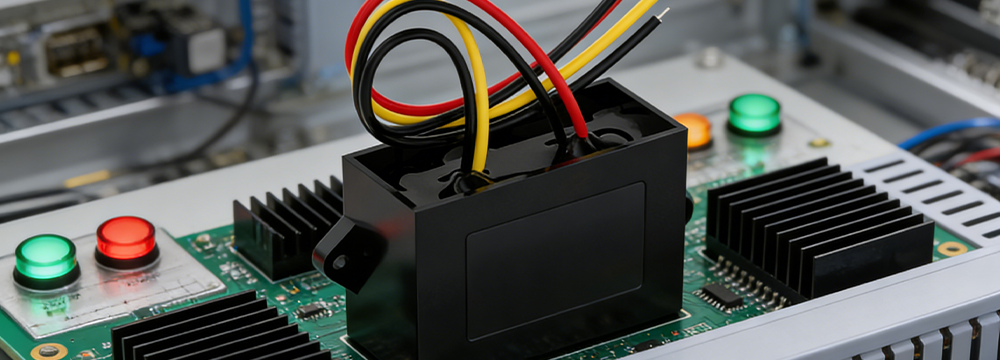
Highly efficient DC-DC converters have evolved from a supporting role in technological development to a driving force of progress. Serving as a foundational technology influencing todays world they optimize every bit of electrical power not just easing our "low battery anxiety" but also essentially propelling a future with more powerful, lighter and environmentally-friendly energy.
Therefore, when your device lasts longer on a single charge or an electric vehicle exceeds its expected range per charge, remember: deep within its power delivery network, a quiet and efficient revolution is taking place—it reduces energy waste while delivering more power into your life.
Share our interesting knowledge and stories on social media