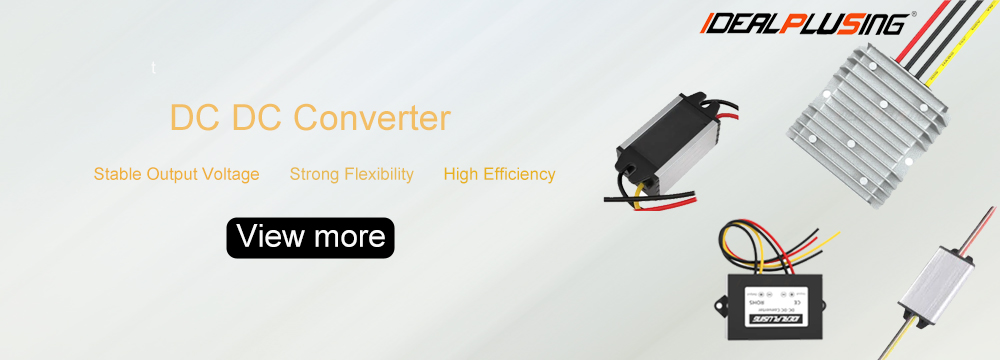
In the wave of iterative advancements in power electronics technology, the selection of high-efficiency DC-DC converters has always revolved around "solving practical pain points." Synchronous rectification (SR) technology has distinguished itself from numerous solutions to become the mainstream choice for high-efficiency DC-DC converters, not through hype or popular concepts, but through precise breakthroughs in addressing the shortcomings of traditional technologies and deep adaptation to niche needs, quietly achieving industry replacement.
Traditional diode rectification solutions have dominated the industry for many years, but their shortcomings are gradually becoming apparent under the trend of high power density and high frequency. Silicon diodes have a fixed forward voltage drop; even high-performance Schottky diodes have a forward voltage drop between 0.2-0.4V. In low-voltage, high-current applications, this voltage drop translates into significant conduction losses. More easily overlooked is that diodes are passive devices; their switching speed is entirely determined by their inherent characteristics and cannot be optimized through external control. When DC-DC converters increase operating frequencies to reduce size, the reverse recovery time of diodes leads to significant switching losses, creating a core contradiction between "high-frequency reduction in size" and "high efficiency with performance." This pain point has become a bottleneck that traditional solutions struggle to overcome.

The core innovation of synchronous rectification technology is replacing passive diodes with actively controlled power MOSFETs. This replacement is not merely a change of components, but also an upgrade of the control logic. The on-resistance (RDS(on)) of MOSFETs can be as low as 5-20 milliohms, far superior to the fixed voltage drop characteristics of diodes. Their conduction losses, calculated as I²R, show particularly significant reductions in high-current scenarios. A further advantage is that the switching timing of MOSFETs can be precisely controlled by a dedicated control IC. Combined with dead-time compensation algorithms and adaptive drive technology, this minimizes overlapping losses during switching, allowing DC-DC converters to maintain over 90% conversion efficiency even at high frequencies above 500kHz, perfectly resolving the contradiction between high frequency and high efficiency.
Beyond its core performance breakthroughs, the adaptability of synchronous rectification technology to niche application scenarios is key to its mainstream adoption. In industrial control, equipment often operates in a wide temperature range of -40℃ to 85℃. Traditional diodes experience increased forward voltage drop at low temperatures and increased reverse leakage current at high temperatures, significantly reducing stability. Synchronous rectification technology, leveraging the low temperature coefficient of MOSFETs and combined with temperature compensation circuitry, maintains stable losses even under extreme temperatures. In portable medical devices, high conversion efficiency is required to extend battery life, and stringent electromagnetic interference (EMI) control is essential. Synchronous rectification technology optimizes switching waveforms and reduces current surges, lowering EMI radiation without the need for additional shielding structures, saving space and reducing costs. These niche but crucial needs, which traditional technologies struggle to meet, have become the core competitive advantage of synchronous rectification technology.
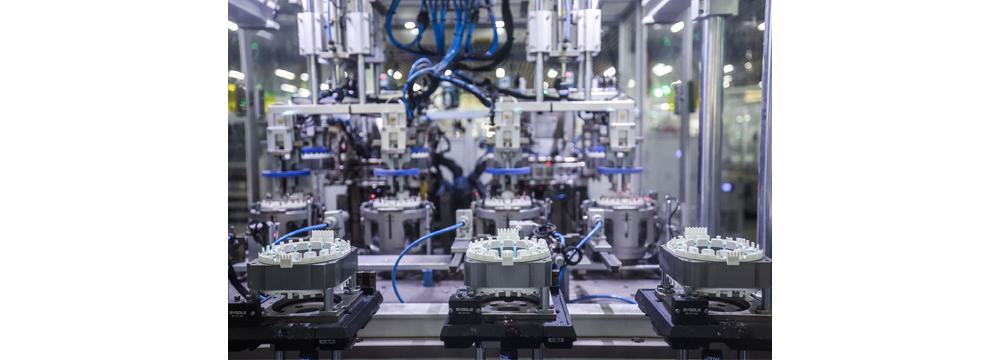
Early adoption of synchronous rectification technology was slow due to high component costs and complex control logic. However, with the upgrade of MOSFET manufacturing processes and the application of technologies such as trench-gate and super-junction, high-performance, low-on-resistance power MOSFETs have been mass-produced, significantly reducing hardware costs. Simultaneously, the emergence of integrated control ICs has integrated drive circuits, protection mechanisms, and compensation algorithms into a single unit, simplifying the design process and allowing even small and medium-sized manufacturers to easily adopt them. More importantly, synchronous rectification technology has not fallen into homogeneous competition but has been continuously optimized for niche needs in different industries—such as wide input voltage adaptation for auxiliary power supplies in new energy vehicles, low quiescent current design for industrial sensors, and vibration and radiation resistance optimization for avionics. This in-depth refinement of specific scenarios has created an irreplaceable technological barrier.
Today, synchronous rectification technology is no longer simply an "efficiency improvement solution," but a comprehensive solution that balances efficiency, size, stability, and environmental adaptability. It avoids the hype surrounding popular technologies, focusing instead on addressing unmet, latent user needs, quietly completing technological replacements in various niche scenarios, from industrial automation to consumer electronics, from medical equipment to the new energy field. This development path, centered on user needs and supported by technological strength, is the fundamental reason why synchronous rectification technology has become the mainstream technology for high-efficiency DC-DC converters. With the combination of wide-bandgap semiconductor materials and synchronous rectification technology, it will continue to make breakthroughs in applications with higher efficiency and in more extreme environments, consolidating its mainstream position.
Share our interesting knowledge and stories on social media